5 Tips For Making Money on the Internet

Main St NetworkWe are still in the covered wagon, Wild West frontier days of making money off the Internet. New ideas, applications, and platforms are springing up almost weekly. If you are looking to cash-in on the Internet, first find a niche – then sell to it. Sports is not a niche. Women in Southern California that play tennis – left-handed – that’s a niche. The trick is finding a target market that is small, but not so obscure that only you and a few neighbors on your block know about it. The key consideration is: small enough to specialize, but large enough to monetize. Now that you’ve got your niche, here’s how to make money off it.

Fusebill CEO Steve Adams was interviewed for Tip 4 in this series “Create an Income Stream”. Read the full article.

Are Billing Interactions Your Elephant?

Billing interactons elephantProbably the most common interactions that customers have with a subscription service are billing related.

This isn’t really surprising because billing touches almost every point in the customer life cycle including:

- creating an account,
- ordering,
- making changes,
- paying for the account,
- receiving invoices, statements,
- managing payment information, credit cards,
- and so on.

Up 40% of inbound calls received by a support team can be billing related. On top of that roughly 50% of customer churn relates to payment related information, most often credit cards that expire or fail because recurring payments weren’t properly processed.

Those are big numbers, and they deal with something really, REALLY important –the customer experience. We all know that happy customers are not only loyal customers but brand ambassadors: they tell their friends; they like you on Facebook; they recommend you –  AND they keep buying from you. This is why many businesses put a lot of emphasis on designing a customer experience that includes lifecycle emails focused on strengthening this relationship.

However, while many businesses take the time to create and implement customer experience emails, they often either overlook or ignore the ad hoc billing pieces being sent out automatically by various software programs they use to conduct their day to day business.  For example, your sales or support team may use a CRM that has automated emails built into it, another program generates receipts, something comes from QuickBooks, something comes from your payment processor, and something comes from your ordering system, and so on. These are communication points reaching your customers that are outside of your carefully designed customer experience.

For example, in a previous business I ran, we put a lot of focus on managing the customer experience, but there were these  nasty collection emails being sent out from a system we used that was buried somewhere deep in the accounting department.  While effective in collecting money, it certainly was not a customer experience that anybody had designed.

Finding and managing all of these emails in all of these different systems can be a daunting task, which is why people often just ignore them.  You know they’re there, and you know they are hurting your customer experience, but you pretend they don’t exist.

But trying to centralize and manage all of the communications is an important part of the customer interaction that will lead to your business being more successful, so it’s time to acknowledge and get rid of the elephant in the room.

One way to get rid of those ad hoc emails is by automating the management of the customer life-cycle from the beginning until the very end of the relationship – including all of the billing activities. Next, make sure all of your customer communications have a consistent tone and character suitable to your brand. Automation is really important because when processes are not automated, they can slip through the cracks, and you get an inconsistent customer experience.

We’ll go into the different ways to do this in future posts so stay tuned!

What’s on in June?

For our first webinar in June the name speaks for itself. What’s New in Fusebill will take a look at some of the exciting changes we’ve made to our billing and payments platform in the last few months. Highlights include our Salesforce CRM integration, Fusebill Webhooks, and Fusebill Secure – the first mobile credit card acceptance application specifically designed for subscription billing. We’ll also give you a sneak peak of what’s next for Fusebill. You won’t want to miss this one, so save your seat now!

SaveYourSeat
What’s New in Fusebill
Date: Thursday June 13, 2:00 PM Eastern Time
REGISTER NOW

Also in June we’ll once again be offering our Introduction to Subscription Billing. If you’re part of  a subscription based company thinking about moving your billing to the cloud, or if you’re looking for information on what sets a billing platform apart from a payment gateway, this webinar will provide you with a solid understanding of what a subscription billing service is, the benefits it can provide, and what to look for when choosing the right service for your business.

SaveYourSeatIntroduction to Subscription Billing
Date: Thursday June 20th, 2:00 PM Eastern Time
REGISTER NOW


 If you’ve missed our previous webinars, you can view them on SlideShare or you can access a previously recorded webinar from our webinars page.

If you have a topic for a webinar you’d like to see us added to our lineup, we’d love to hear it. Just send us an email at info@fusesbill.com or add it in the comments section of this article.

Is your customer experience as good as it could be?

Customer Life-cycleOnce banished to the back office, billing systems like Fusebill now play a pivotal role in customer life-cycle management for subscription businesses. Your recurring billing system can be tightly integrated to a CRM system like Salesforce; loosely coupled, or actually be used as your subscription CRM.

Since a billing system automates life-cycle emails such as:

  • New customer “welcome” emails
  • Successful payment notifications
  • Failed payment notifications
  • Alerts about expiring credit cards
  • Statements and invoices
  • Collection warnings, dunning emails and account status changes

you and your customers are notified when an account status changes, which will significantly increase efficiencies across accounts and help build strong customer relationships that lead to longer customer relationships.

Recently, Fusebill CEO, Steve Adams conducted a webinar on this interesting topic. If you missed it you can, you can view the slides on SlideShare or download the PDF.

If you have feedback or a question for Steve, you can email info@fusebill.com or call 1-888-519-1425.

Find out about upcoming webinars!

What’s the REAL cost of your customer?

What’s the REAL cost of your customer? One of the key metrics for subscription based businesses to track is Customer Acquisition Cost (CAC). This metric identifies how much it costs to acquire a particular customer. CAC has a lot of practical uses. It can be used to optimize sales and marketing programs, highlight unprofitable channels and programs, and measure efficiency. In fact, this single number can guide you through your marketing efforts, and help you cut down ineffective marketing costs by making sure money is put behind the programs that bring in customers with the lowest cost effect.

To calculate:

Customer Acquisition Cost

There are three main variations of CAC:

  • Full Cost View
    • Include all salaries, commissions, program spend, etc.
    • Incremental Costs
      • Essentially treat headcount costs as fixed
      • Marketing Program
        • Only consider external marketing program costs

The more narrow the definition, the more narrowly you should apply the scope.  What you should not do is ONLY look at your marketing costs and assume that this is your full cost of acquisition. Not only can doing this skew your CAC, but when you look at your Customer Lifetime Value metric (another important subscription-based number), you will find that it doesn’t make much sense either.  To avoid this, make sure that all of your other costs are included.

Once calculated, your CAC should always be less than the overall value of the customer in the entire customer life-cycle. Also, it should be monitored each quarter to ensure business stability as well as before and after any large initiatives to measure their effectiveness.

If you‘d like more information on how CAC and the other key metrics subscription businesses should monitor, view our 4 Key Metrics for Your Subscription Based Business on SlideShare.

What is MRR and Why should you measure it?

MRR is short for Monthly Recurring Revenue and is the effective monthly revenue from all active recurring subscriptions under the account.

  • Example: A $10/monthly plan = $10MRR and a $120/year plan = $10MRR

If you’re running a subscription based business, it is arguably the most important metric to monitor because not only does it give you a baseline (this month’s recurring revenue should indicate next month’s recurring revenue unless you add a customer or lose a customer), it also helps you to normalize annual charges.

Changes in MRR are an indicator of the health of your business.   Charting it helps you to see right away if this month was better than last month, recognize month over month trends in order to compare customer satisfaction, and once your baseline is established, help you answer forecasting questions like how much new business you need to bring in to meet projections.

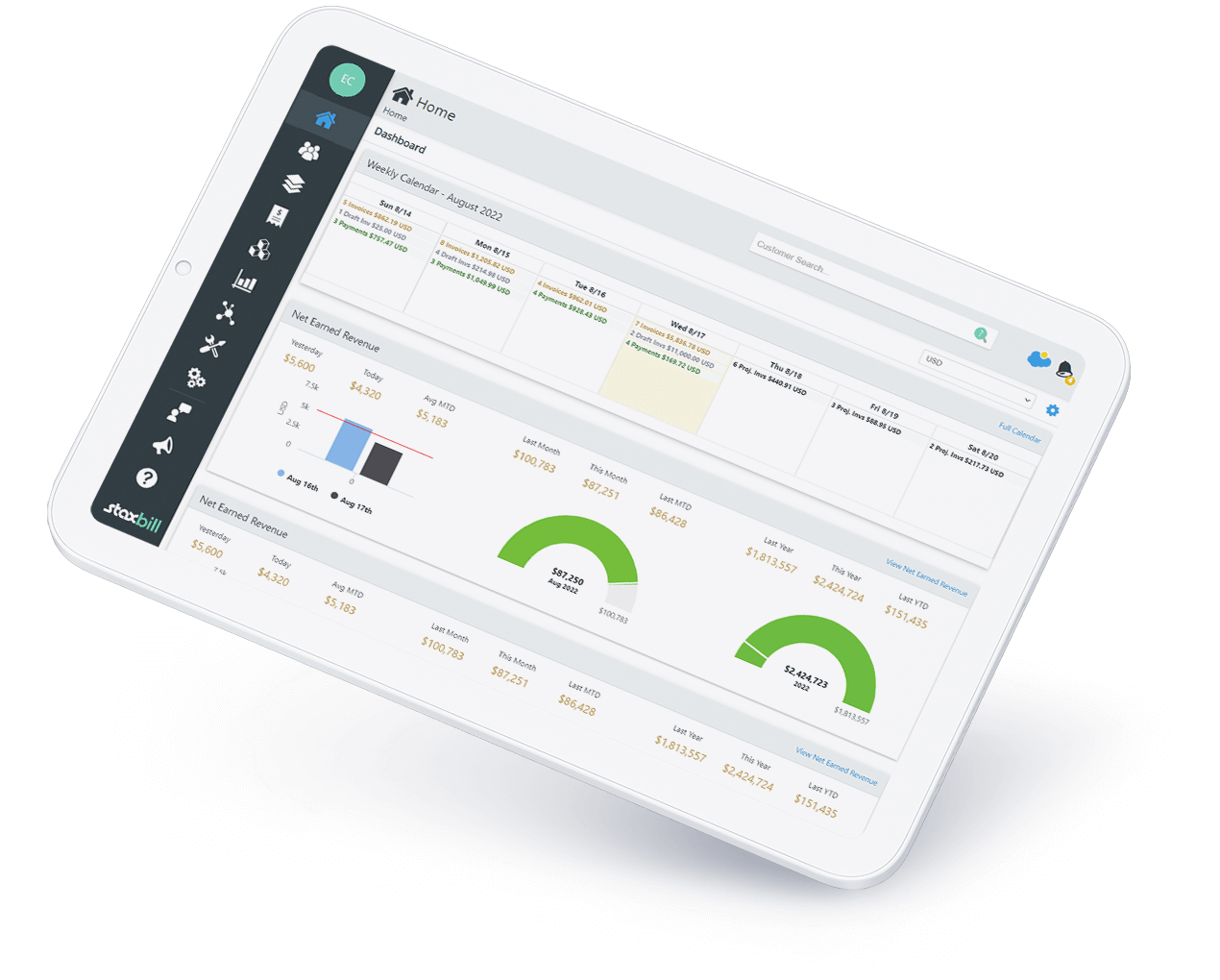
Fusebill’s Executive Dashboard

Fusebill’s Executive Dashboard includes an MRR chart of your business.

When measuring, focus on customers that are moving forward with you rather than the ones that aren’t paying as well as what’s going to be coming in month after month. This means excluding cancelled and non-paying customers, and one-time charges like setup fees, support and professional service charges, etc. If your service includes usage charges, only include those that are repeatable (like user licenses). At Fusebill we don’t include usage charges when calculating MRR because we focus strictly on the recurring aspect of billing.

We also encourage people to segment their customer base and look at the MRR by the different segments.  This can help you to identify customer characteristics that are correlated with strong revenue and lower cost of support and service, respectively. For example, look at customers that are actively using the service vs. those who might just be paying for it and not using it. Your passive (or less engaged) customers are higher risk because they are more likely to churn and drop away.  Company size, sector, customer type (B2B, B2C, B2B2C), and use case are other common ways to segment your customer base.

If you‘d like more information on how MRR and other key metrics subscription businesses should monitor, view our 4 Key Metrics for Your Subscription Based Business on SlideShare.

What Can Webhooks do for You?

Fusebill WebhooksWebhooks are an HTTP POST callback request sent to a URL of your choice in response to an event.

If you’re not a developer, that description may not mean much to you. In layman’s terms, webhooks are nifty things that ‘publish’ or ‘notify’ other systems of changes, basically turning the Internet from a pull platform to a push platform.

Typically a system-system integration, webhooks allow you to collect information about events within the customer life-cycle so that other systems can act on the data in near real-time. Basically, instead of having to ask or look up if something has happened, you’re told when something happens.

Here are some common Fusebill webhook applications:

  • A customer is created in Fusebill. The webhook notifies a downstream system that this has occurred, so it can choose what to do (i.e., provision the service).
  • A customer upgrades (moves from free trial to paid, or changes plans). The webhook notifies a downstream system so it can adjust the service delivered.
  • A customer changes status (e.g., for non-payment, or cancellation). The webhook notifies a downstream system so it can stop delivering the service.

To set up webhooks in Fusebill navigate to Settings >> Integrations and click the  New Integration button, this will bring up a pop-up like the one shown above.

If you’d like more info on our webhooks including configuration, supported events, event data, etc. Visit the Webhooks section of the Fusebill Knowledge Base.